













Markets Brace for Fed Rate Decision as UK Inflation Adds to Rate Concerns


Markets are heading into one of the most closely watched central bank sessions of the month, with the Federal Reserve due to announce its policy decision later on Wednesday and fresh UK inflation data adding to concerns about persistent price pressures.
The common thread is energy: oil remains above $100 a barrel, keeping inflation risks elevated on both sides of the Atlantic and pushing investors to reassess how restrictive monetary policy may need to become.
Rates Return to Centre Stage
The Fed enters the meeting with its target range at 3.50% to 3.75%, unchanged at the July meeting. Markets are now pricing a more than 90% probability of a 25-basis-point increase, according to CME FedWatch, compared with around 61% a week ago and 33% a month earlier. A quarter-point increase would take the target range to 3.75% to 4.00%.
Markets Price High Probability of September Fed Rate Hike
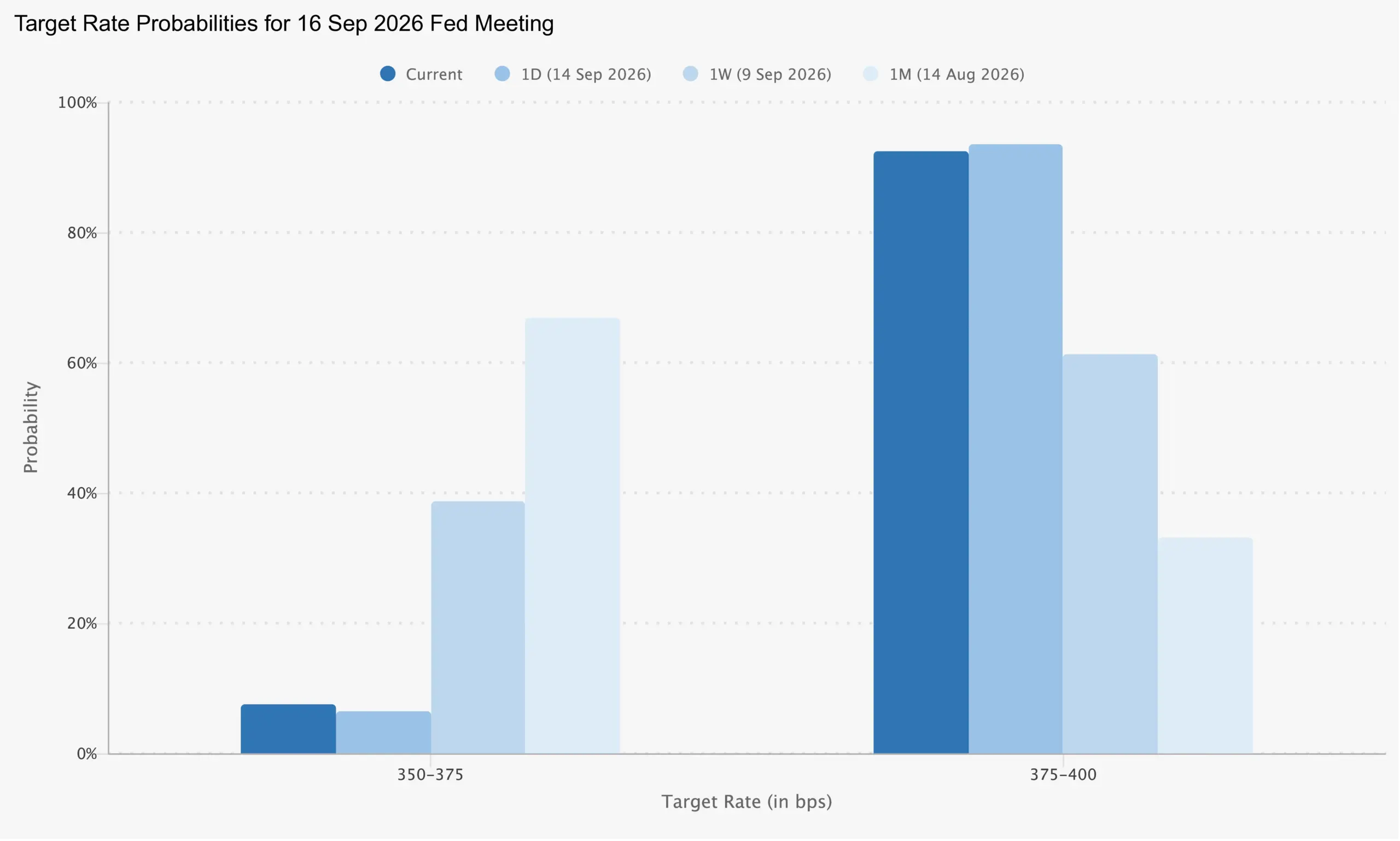
Source: CME FedWatch. Data as of 16 September 2026.
Markets are pricing a greater than 90% probability of a 25-basis-point Federal Reserve rate increase in September, compared with around 61% one week earlier and 33% one month earlier.
The shift shows how quickly expectations for September policy have changed as investors respond to renewed inflation pressures. That repricing follows inflation data that has kept the Fed’s 2% objective firmly in focus. US CPI rose 3.4% year on year in August, while core CPI increased 2.4%.
The Fed’s preferred PCE measure was firmer in July, with headline PCE inflation at 3.7% and core PCE at 3.3%. Elevated oil prices remain a key complication, raising the risk that inflation pressures could prove more persistent.
Fed Guidance Could Matter More Than the Decision
Those inflation concerns have also been reflected in bond and currency markets. The benchmark US 10-year Treasury yield moved above 5% on Tuesday, reaching its highest level since 2007, while the US Dollar has strengthened as expectations for higher interest rates have increased.
With a quarter point increase already heavily priced, attention is likely to focus on what Fed Chair Kevin Warsh signals about the path for rates beyond September. The Fed will also release updated economic projections, giving investors a clearer indication of how policymakers see growth, inflation and interest rates developing.
UK Inflation Adds to Bank of England Debate
UK inflation has added another layer to the global rates story. Consumer price inflation rose to 3.1% in August from 2.9% in July, reaching a five-month high as higher energy costs lifted the headline rate. The figure was also above the Bank of England’s earlier forecast of 2.8%.
Underlying measures were steadier, however. Core inflation remained at 2.6% for a fourth consecutive month, while services inflation held at 3.4%. That distinction matters because the Bank of England closely watches underlying price pressures when assessing whether inflation is becoming more persistent.
The figures arrive a day before the Bank of England’s policy decision. Investors see roughly a one in three chance of a 25-basis point increase on Thursday, while two increases are priced before the end of 2026 as markets assess the risk that higher energy costs spread more broadly through prices.
What Markets Watch Next
Sterling showed only a limited reaction to the UK inflation figures, while gold traded around $4,328 an ounce ahead of the Fed decision. Gold is often viewed as an inflation hedge, but higher interest rates and bond yields can increase the opportunity cost of holding the non-yielding metal.
The immediate focus now turns to the Fed’s decision, updated projections and Warsh’s comments, followed by the Bank of England on Thursday. Rather than the headline decisions alone, markets will be assessing whether policymakers view the latest increase in inflation as largely an energy driven shock or as a risk that could require a more restrictive interest rate path in the months ahead.