













Federal Reserve Holds Rates Steady but Hawkish Outlook Revives 2026 Hike Expectations


The Federal Reserve left interest rates unchanged at its latest policy meeting, but markets focused less on the decision itself and more on what policymakers signalled about the future. While rates remained at 3.50%-3.75%, a more hawkish set of projections and changes to the policy statement suggested officials remain cautious about inflation risks. As a result, investors were forced to reassess expectations for the path of US interest rates through 2026. The shift in tone prompted moves across bonds, currencies and broader financial markets, highlighting how sensitive investors remain to changes in central bank guidance.
Fed Holds Rates but Turns More Hawkish
The Federal Open Market Committee (FOMC) voted to leave interest rates unchanged, extending its pause after a period of restrictive monetary policy designed to bring inflation back under control.
However, the meeting delivered a more hawkish message than many investors had anticipated.
The Fed’s updated dot plot showed that 9 of the 18 policymakers now expect at least one additional rate increase during 2026. The dot plot represents policymakers’ projections for the future path of interest rates and is closely watched by markets for clues about the Fed’s policy outlook.
At the same time, officials removed previous forward guidance from the policy statement, reinforcing the view that policymakers want to retain flexibility rather than commit to a specific policy direction.
Together, these changes signalled that the Federal Reserve remains prepared to keep monetary policy restrictive if inflation pressures prove more persistent than expected.
What Changed in the Fed’s Message?
Although the policy rate itself was left unchanged, the tone of the meeting represented an important shift in communication.
Earlier this year, markets had become increasingly confident that lower interest rates were simply a matter of time. The latest meeting challenged that assumption.
Rather than signalling an imminent move towards easier policy, the Fed emphasised that inflation risks have not fully disappeared and that future decisions will remain dependent on incoming economic data.
Markets are also continuing to adapt to the policy approach under Chair Kevin Warsh. While officials stopped short of indicating that additional tightening is likely, they made clear that further action remains possible if inflation does not continue moving towards target.
The overall message was one of patience rather than urgency, but it was notably more restrictive than investors had been expecting.
Markets React to Higher-for-Longer Signals
Financial markets responded quickly as investors adjusted their interest-rate expectations.
US Treasury yields moved higher following the decision, reflecting the possibility that borrowing costs could remain elevated for longer than previously anticipated.
The US Dollar Index also strengthened and consolidated around the 100.310 area as traders reassessed the outlook for US monetary policy.
US Dollar Climbs as Hawkish Fed Revives 2026 Hike Expectations
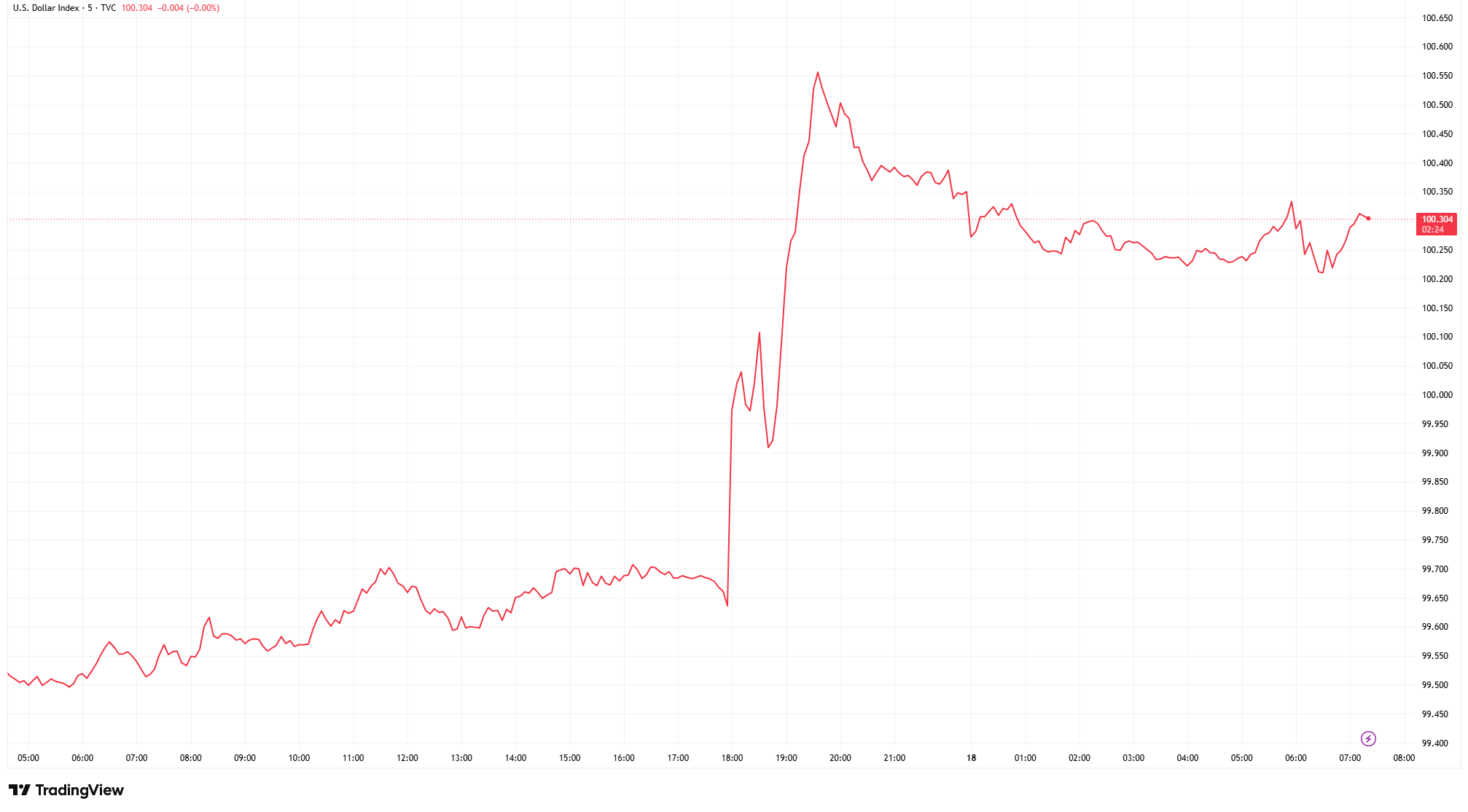
Source: TradingView. Past performance is not a reliable indicator of future performance. Data as of 18 June 2026.
The US Dollar Index climbed following the Federal Reserve’s latest policy decision, as investors adjusted expectations after policymakers signalled that interest rates could remain restrictive for longer.
To some extent, the latest market reaction reflects a repricing of expectations.
Investors may have become too comfortable with the prospect of lower interest rates, and the Fed’s latest communication served as a reminder that inflation risks remain an important consideration for policymakers.
While officials are prioritising price stability, they have been careful not to precommit to either further rate increases or future rate cuts.
What Investors Will Be Watching Next
Attention now shifts to the next round of economic data.
Upcoming inflation reports, labour market data and future comments from Federal Reserve officials are likely to play an important role in shaping market expectations for the remainder of the year.
Investors will also be closely monitoring the Bank of England’s policy decision, as differences in monetary policy between major central banks could become an increasingly important theme across currency and bond markets.
The interaction between inflation, growth and central bank policy remains one of the most influential drivers of global market sentiment.
Bottom Line
The Federal Reserve left interest rates unchanged, but its latest projections and policy guidance delivered a more hawkish message than markets had expected.
By signalling that further tightening remains possible and removing earlier forward guidance, policymakers reinforced the view that inflation risks continue to influence decision-making.
For investors, the key takeaway is that while rates may currently be on hold, the path towards easier monetary policy has become less certain. As a result, interest-rate expectations, Treasury yields and the US dollar are likely to remain highly sensitive to incoming economic data in the months ahead.