













Gold: The Safe Haven in a Volatile World


Gold remains one of the most reliable safe‑haven assets in global markets, and the events of early March offered another clear example of how it behaves in times of heightened geopolitical tension.
On Monday, gold prices briefly moved above $5,400 per ounce as the market reacted to the latest developments in the Middle East. Soon after, prices eased as profit‑taking and broader macro factors came into play.
Understanding this pattern helps explain why gold often becomes a focal point during uncertain periods, especially when markets are evaluating the potential impact of geopolitical risks on broader economic conditions.
Why Gold Spiked
The first part of Monday’s move was driven by rising geopolitical stress, particularly related to the conflict involving the United States, Israel, and Iran.
According to CNBC, gold shot above $5,400 overnight as the Middle East conflict escalated following joint US‑Israeli military strikes on Iran and retaliatory actions across the region.
Gold climbed as much as 2.7%, trading above $5,400 before easing slightly after markets opened. These initial moves were consistent with gold’s role as a defensive asset.
The escalating tensions in the Middle East have been a key driver behind gold’s rise above $5,200, as investors typically respond to military escalation by repositioning away from risk assets.
This type of move doesn’t indicate certainty about future conflict outcomes, it simply reflects how markets hedge against worst‑case scenarios while information is still developing.
The Role of Oil and Inflation Fears
Conflicts in the Middle East often impact oil supply routes. Strikes on Iran and the closure of the Strait of Hormuz disrupted around 20% of global oil supply, pushing Brent crude higher by roughly 13%.
Because gold is viewed as a hedge against inflation and geopolitical instability, these conditions supported the rally. When oil prices rise sharply, investors often look ahead to what this may imply for inflation expectations.
Even without forecasting, higher energy prices typically create a more fragile environment for risk assets. This is why gold tends to catch a bid quickly, not in response to confirmed inflation, but in anticipation of the pressures that rising oil may introduce into the global economy.
Structural Support from Central Banks and ETFs
Central banks have steadily accumulated gold to diversify reserves away from dollar‑denominated assets. Central‑bank buying remained robust throughout 2025 and into early 2026.
SPDR Gold Shares ETF (GLD) also reached record assets under management, surpassing $180 billion in February 2026.
These longer‑term flows help explain why price spikes have been frequent. When structural demand is already strong, geopolitical shocks tend to amplify an existing trend rather than create a new one. This means that even short‑term volatility occurs on top of a broader backdrop where gold is already well supported by long‑duration investors, making it more reactive when tensions flare.
Why the Price Fell Later in the Day
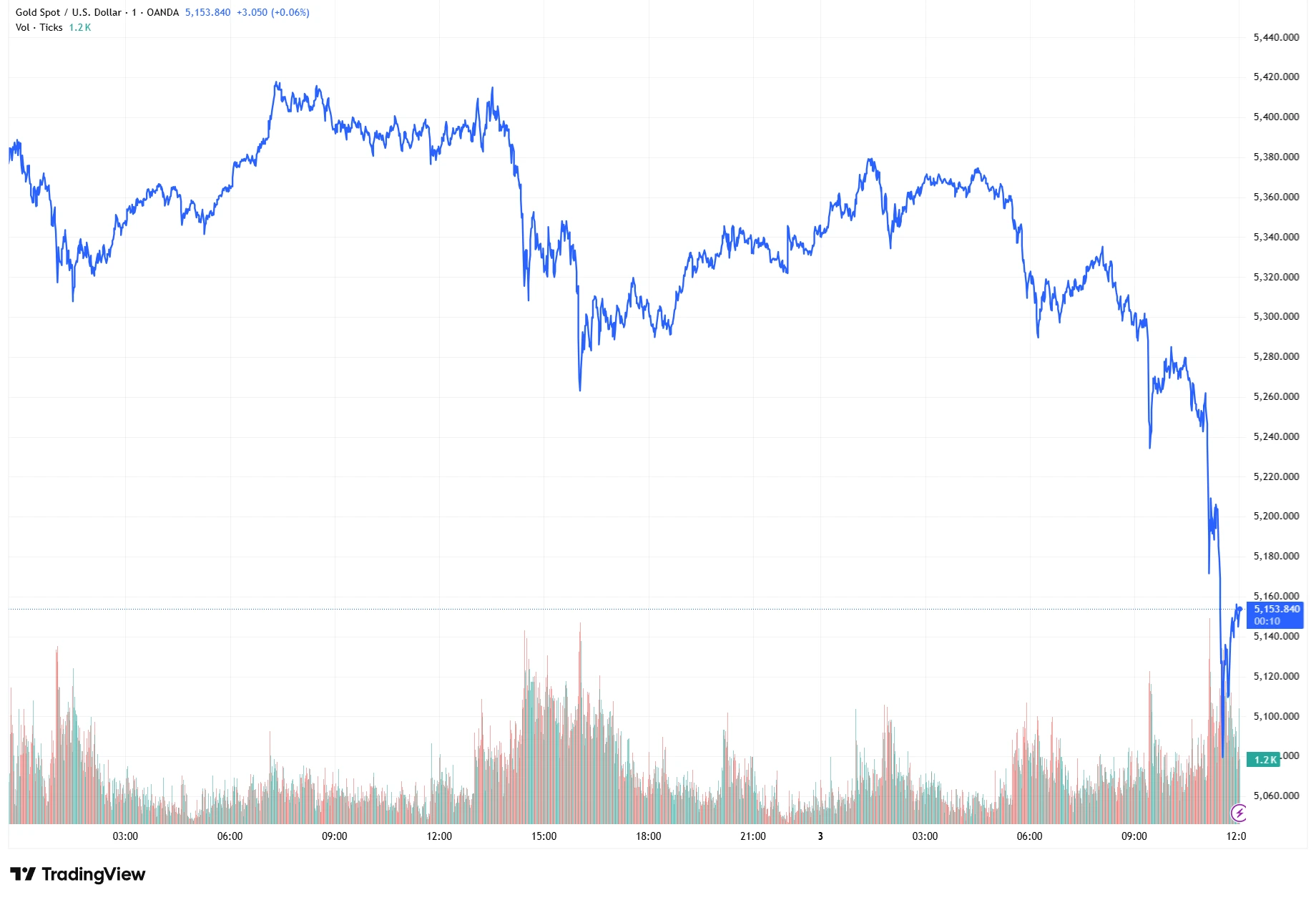
Despite the strong early rally, gold prices pulled back as the day progressed. This pattern is common during sharp intraday moves and often reflects shifting trader positioning rather than a change in the underlying narrative.
Intraday Gold Volatility: Early Strength and Afternoon Sell‑Off
Profit‑Taking
Gold “pared some gains” after rising more than 2% earlier in the session. Profit‑taking usually occurs when prices move rapidly, and intraday traders look to secure short‑term gains. This behaviour is typical during periods of uncertainty because traders often prefer to reduce exposure rather than carry positions overnight.
A Stronger US Dollar
On Monday, the US dollar index rose by about 1%, making gold more expensive for non‑US buyers. The dollar strength contributed to the afternoon pullback.
A firmer dollar had also been limiting gold’s upside in recent sessions. This tug‑of‑war between gold and the dollar is common during geopolitical stress, and it often shapes intraday flows even when the broader safe‑haven demand remains intact.
Bond Yields and Macro Expectations
Gold also moved lower toward $5,248 on March 3 as rising yields and inflation data shifted market expectations for Federal Reserve policy.
Higher yields increase the opportunity cost of holding non‑interest‑bearing assets such as gold. While this doesn’t remove safe‑haven interest, it can soften short‑term momentum, especially when traders reassess how central banks may respond to ongoing geopolitical risks.
What This Means for Traders
Gold’s movement on Monday shows how safe‑haven dynamics work in real time. When markets face geopolitical shocks, gold tends to move higher immediately. Short‑term swings are normal, and prices may pull back as traders react to currency moves or macro developments.
The environment remains volatile. CNBC describes the current Middle East conflict as ongoing. Gold could test higher levels if geopolitical tensions continue.
Rather than forecasting outcomes, traders can monitor how gold behaves around key levels. Sustained flows into gold during uncertain periods often reflect broader market caution and can signal when investors are becoming more defensive.
Conclusion
Gold’s safe‑haven role remains intact. The rise above $5,400 was driven by geopolitical tensions and defensive positioning. The later decline reflected profit‑taking, dollar strength, and shifting macro expectations.
For traders, gold tends to respond quickly to geopolitical stress, but the path is rarely smooth. Watching developments in the Middle East, movements in the US dollar, and bond‑yield trends will be essential in understanding the next stages of gold’s price behaviour.