Why Markets Sometimes Reverse Without Any News


When Prices Change Direction Without a Headline
Many traders have experienced this situation. A market rally suddenly turns lower, or a sharp sell-off begins to recover, even though no major economic announcement has appeared.
At first this can seem confusing. We often expect markets to move only when new information arrives. In reality, though, financial markets are constantly adjusting to expectations, positions, and sentiment. Prices can change direction simply because traders are reacting to existing conditions.
Economic news can certainly trigger volatility. However, many market reversals happen for internal reasons such as positioning, liquidity, and profit-taking.
Understanding these dynamics can help traders interpret market behaviour more clearly.
How Positioning Influences Price Movements
One important factor is market positioning.
Traders and investors often build positions in advance of major events such as interest rate decisions or economic data releases. When many market participants share the same outlook, the market can become crowded.
For example, if a large number of traders expect a currency to rise ahead of a central bank meeting, many of them may already hold long positions. In this situation the market becomes sensitive to even small shifts in sentiment.
If some traders begin to reduce their exposure, others may follow quickly. The result can be a rapid move in the opposite direction, even if there has been no major news announcement.
In other words, price moves may reflect how traders are positioned rather than new information entering the market.
Liquidity and Order Flow
Another key factor is liquidity, which refers to how easily assets can be bought or sold without causing large price changes.
Markets move when buy and sell orders interact. When liquidity is strong, large orders can be absorbed without major disruption. When liquidity becomes thin, smaller orders can move prices more dramatically.
This often happens during quieter trading sessions or after extended market trends. As traders reduce positions, the balance between buyers and sellers can shift quickly.
In these conditions, even modest trading activity may push prices through key levels and create the appearance of a sudden reversal.
Profit-Taking and Technical Levels
EUR/USD Reversal Near Key Resistance
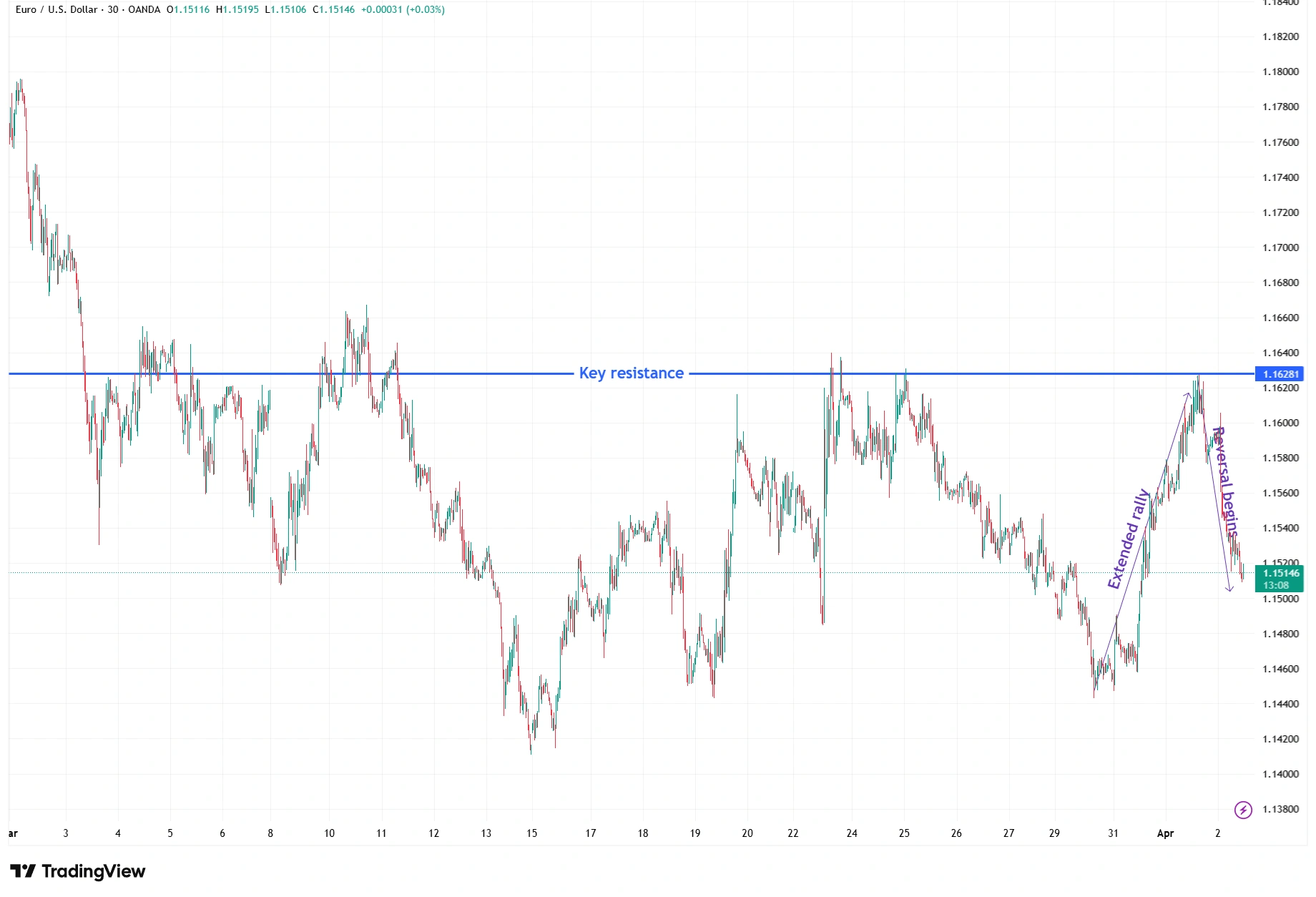
Source: TradingView. Past performance is not a reliable indicator of future performance. Data as of 2 April 2026.
EUR/USD rallies into a key resistance level before reversing lower, illustrating how profit-taking and positioning adjustments can shift market direction even without a major news catalyst.
Profit-taking is another common reason for price reversals.
After a strong move, many traders decide to lock in gains. When a large number of participants begin closing positions, the resulting order flow can slow or reverse the trend.
Technical levels can also influence behaviour. Traders often watch areas such as support, resistance or trend lines when deciding whether to enter or exit positions.
When prices approach these levels, some traders may take profits while others open new positions in the opposite direction. This combination can create turning points in the market, even when no new economic data has been released.
The Role of Expectations
Financial markets are forward-looking. Prices reflect what traders believe might happen in the future rather than simply reacting to current events.
When expectations become very optimistic or pessimistic, markets can become vulnerable to reversals. If sentiment shifts slightly, traders may adjust positions quickly.
For example, if investors become overly optimistic about economic growth, even a small doubt can trigger selling. Conversely, if sentiment has been negative for a long period, a small improvement in outlook may spark a rally.
These changes in expectations can move markets without any obvious external catalyst.
What Traders Can Learn
The key lesson is that markets move because participants are constantly adjusting their positions and expectations.
Not every price movement requires a headline. Sometimes the most important drivers are internal market dynamics such as positioning, liquidity and sentiment.
For traders, this highlights the importance of risk management and patience. Watching how price behaves around key levels and understanding market sentiment can provide useful context for interpreting sudden moves.
Recognising that markets can reverse without obvious news may also help traders avoid reacting emotionally when price action becomes volatile.
Bottom Line
Markets do not always need new information to change direction.
Crowded positioning, shifts in order flow, profit-taking and changing expectations can all cause prices to reverse. These internal market dynamics are a natural part of how financial markets function.
By understanding these factors, traders can better interpret unexpected market moves and manage risk more effectively.