Backtesting & Demo Trading
You’ve probably heard this advice before: “Don’t trade with real money until you’ve tested your strategy.” But how exactly do you test a strategy safely? The answer lies in two of the most powerful tools in trading that every trader should use: backtesting and demo trading. In this article, we will walk you through some key concepts on how to backtest portfolio performance and demo trading using a demo trading account, like a forex demo account. We'll learn:
- Why demo trading is a must for beginner.
- How to create a demo account.
- The difference between backtesting and demo trading.
- How to backtest your portfolio to find winning setups.
- When to transition from simulation to live trading.
- What is Demo Trading and Why does it matter?
- Here’s how to create a Forex Demo Account withEC Marketsin 5 easy steps:
- Demo Trading vs Live Trading - Understand the Difference
- What is Backtesting?
- How to Backtest your Portfolio
- How does Demo Trading and Backtesting work together
- The Benefits of using a Forex Demo Account
- How long should you use a Forex Demo Account?
- Conclusion: Backtesting & Demo Trading
What is Demo Trading and Why does it matter?
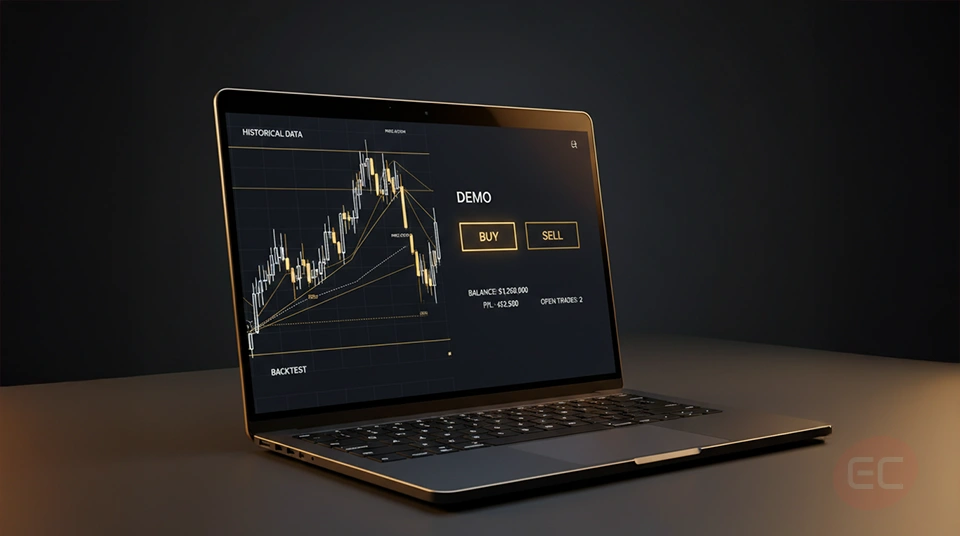
Let’s start with the very basics, what is demo trading? Demo trading is the process of placing trades in a virtual environment, so essentially, you're using fake money but real market prices - similar to flight simulation, but for trading.
So whether you're trading forex, stocks, or crypto, a demo trading account allows you to:
- Test strategies in real time.
- Practise using a trading platform.
- Build confidence without risking your own capital.
Trading without practice is a recipe for failure. But how does demo trading really prepare you?
Here’s how to create a Forex Demo Account with EC Markets in 5 easy steps:
If you’re wondering how to create a demo account, don't worry! It only takes a few minutes and it gives you access to real-time live market prices.
1) Go to the EC Markets website and click on “Demo”.
2) Fill out the registration form with your name, email, and country.
3) Choose your platform (MT4 or MT5) and your account type.
4) Set your demo details like virtual deposit, leverage, and currency.
5) Lastly, download the trading platform and log in with your demo credentials.
Here’s a little tip to help you get started: Take a moment to learn how to create a demo account that suits your trading goals. If you plan to trade Forex, then choose a forex demo account so you can practise spreads, pips, and leverage in that specific environment. Knowing how to create a demo account that replicates your future live trading environment will help you transition more smoothly and identify potential gaps in your strategy early on. This will help narrow down your practice to what you truly need.
Demo Trading vs Live Trading - Understand the Difference
Demo trading feels safe, because it is! And although that’s great, it’s also not. As mentioned earlier, demo trading does not test your emotions, let’s break this down further, here’s what a demo account won’t teach you:
- Emotional control under pressure
- Handling real losses and wins
- Slippage and execution in fast-moving markets
That being said, although a demo account doesn’t teach you absolutely everything, you should still spend at least 1–3 months using a demo trading account before going live. Use this time to build solid habits and track performance, once you’re comfortable with a demo environment, you should be ready to move onto a live environment.
What is Backtesting?
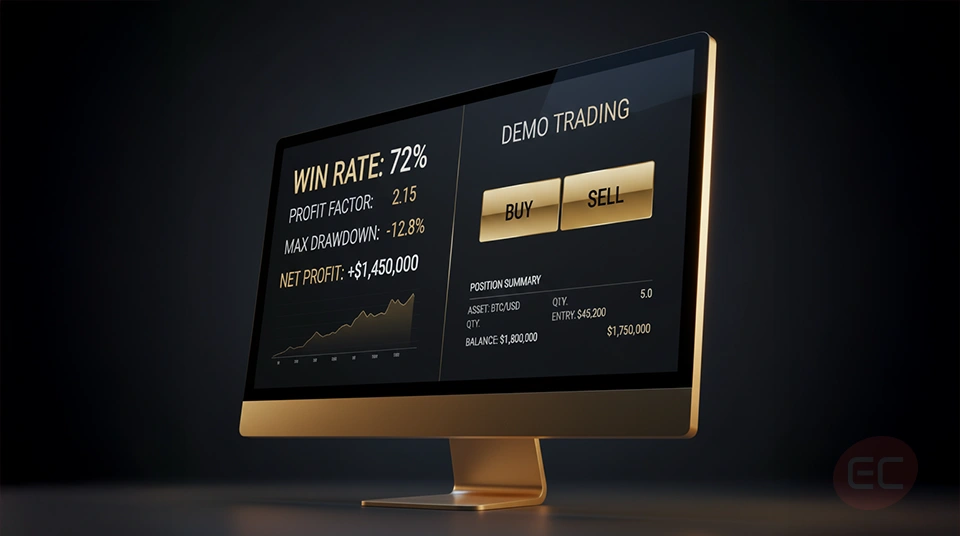
Now that we’ve covered how to create a demo account and what it is, let’s talk about backtesting. Before you jump into trading on the live markets, it is important to learn how to backtest portfolio performance effectively.
Backtesting is a powerful technique that simulates your strategy based on historical data.
But what does it mean to backtest portfolio performance?
Backtesting your portfolio means running your trading rules across months (or even sometimes years) of past price data so you can evaluate:
- How often it wins
- Average return per trade
- Drawdowns and risk levels
As opposed to demo trading, backtesting is actually much faster, you can review hundreds of trades in an hour.
How to Backtest your Portfolio
You’ll be happy to know that you don’t actually need fancy tools to backtest your portfolio, you just need a method and a charting platform. Here’s a step by step guide to help you get started:
1) Pick a strategy: be specific, write down your entry signals, exit rules, stop-loss, and profit target.
2) Choose an asset and a timeframe: for example, test your strategy on EUR/USD 1H charts from 2020–2023.
3) Scroll back and simulate: manually go candle by candle and apply your rules as if you’re trading in real time.
4) Record each of your trades: write it all down, including your:
- Entry/exit points
- Stop-loss hit or not
- Win/loss
- Risk-to-reward ratio
5) Review your performance: after about 100+ trades, calculate your win rate, your average return, and max drawdown.
As you continue to backtest portfolio performance, make sure you track not only your strategy’s overall return but also individual asset contributions. Too many traders forget that one strong performer can hide weaknesses in the rest of the portfolio. By taking time to properly backtest portfolio setups across multiple timeframes, you’ll gain insights into where your true edge lies and how to adjust allocations for improved risk management.
Do you want to test faster? Luckily, platforms like MetaTrader can actually automate the backtest process for you, you can learn more about the MT4 and MT5 by clicking here.
How does Demo Trading and Backtesting work together
Once you have started to backtest portfolio results, it is then time to validate them in real-time market conditions by demo trading. This puts theory into practice - your backtest portfolio will give you a historical view and demo trading will tell you how that same strategy performs in the live markets.
Here is a breakdown on how demo trading and backtesting complement each other:
| Task | Backtesting | Demo Trading |
| Speed | Fast (simulate years in an hour) | Real-time (slower) |
| Real Market Conditions | No | Yes |
| Emotions | Low | Low–Medium |
| Risk | None | None |
| Best Use | Strategy Validation | Platform Practice & Routine Building |
So, if you put all of this into practice, ideally, your workflow should look something like this:
1. Backtest your portfolio to see if the strategy works.
2. Practise that strategy with a demo trading account.
3. Once you’re consistent, go live with real money.
The Benefits of using a Forex Demo Account
Why should you use a forex demo account and what are the benefits? Once you’ve learned how to create a demo account, these are the key advantages you’ll enjoy while practising with it.:
- You can practise leverage and lot sizing.
- You can learn how pips and spreads affect trades.
- You can test strategies in the world’s most liquid market.
- You can familiarize yourself with the broker's platform.
How long should you use a Forex Demo Account?
This is one of the most common questions beginners ask, and it’s a fair enough question: how long is long enough? And the answer is simple: you should use a demo account until you see real, and consistent results, in other words:
- You should start seeing a proven strategy with positive results.
- You should have discipline in following your rules.
- You should have completed at least 30–50 trades with a win rate that meets your expectations.
For many traders, that means 1 to 3 months using a demo trading account, testing your skills, seeing results and then going live.
Conclusion: Backtesting & Demo Trading
Congratulations on making it this far into the course! By now you should have a good understanding of:
- Why a demo trading account is essential.
- How to open a forex demo account or any demo trading account.
- How to backtest your portfolio like a pro.
- The difference between demo trading and backtesting.
So whether you’re learning how to create a demo account or you’re practising on one already, these tools exist to make your trading experience better and more importantly, safer. By mastering how to create a demo account and combining it with disciplined backtesting, you’ll gain the consistency and confidence needed before committing real capital. And when you're finally ready to go live, after you’ve tested your strategies on a forex demo account, you'll be more prepared than most traders ever are.
We hope you enjoyed this course on how to backtest portfolio performance, how to create a demo trading account and how to use it. We hope you understand the importance of each! By following these rules, you should be ready to enter the live market and start making profits in a couple of months.
If you’re ready to start learning more about trading, then keep reading the EC Markets Academy as we explore more trading topics that will get you feeling like a confident trader in no time. See you at the next course!