














Economic Calendar: What Happened This Week?


Financial markets respond quickly to new information, and the economic calendar is one of the main sources of that information. Data releases such as inflation, employment, and business activity help investors understand how the economy is performing and what central banks might do next.
What matters is not just the number itself, but how it compares to expectations. A stronger inflation reading, for example, can push bond yields higher if markets believe interest rates may stay elevated for longer. Weaker growth data can have the opposite effect, increasing expectations of policy easing.
This week’s economic calendar highlighted a familiar challenge for markets: balancing signs of slowing growth with persistent inflation pressures. Several key events shaped sentiment across currencies, equities, and bonds.
Oil Prices and Inflation Concerns
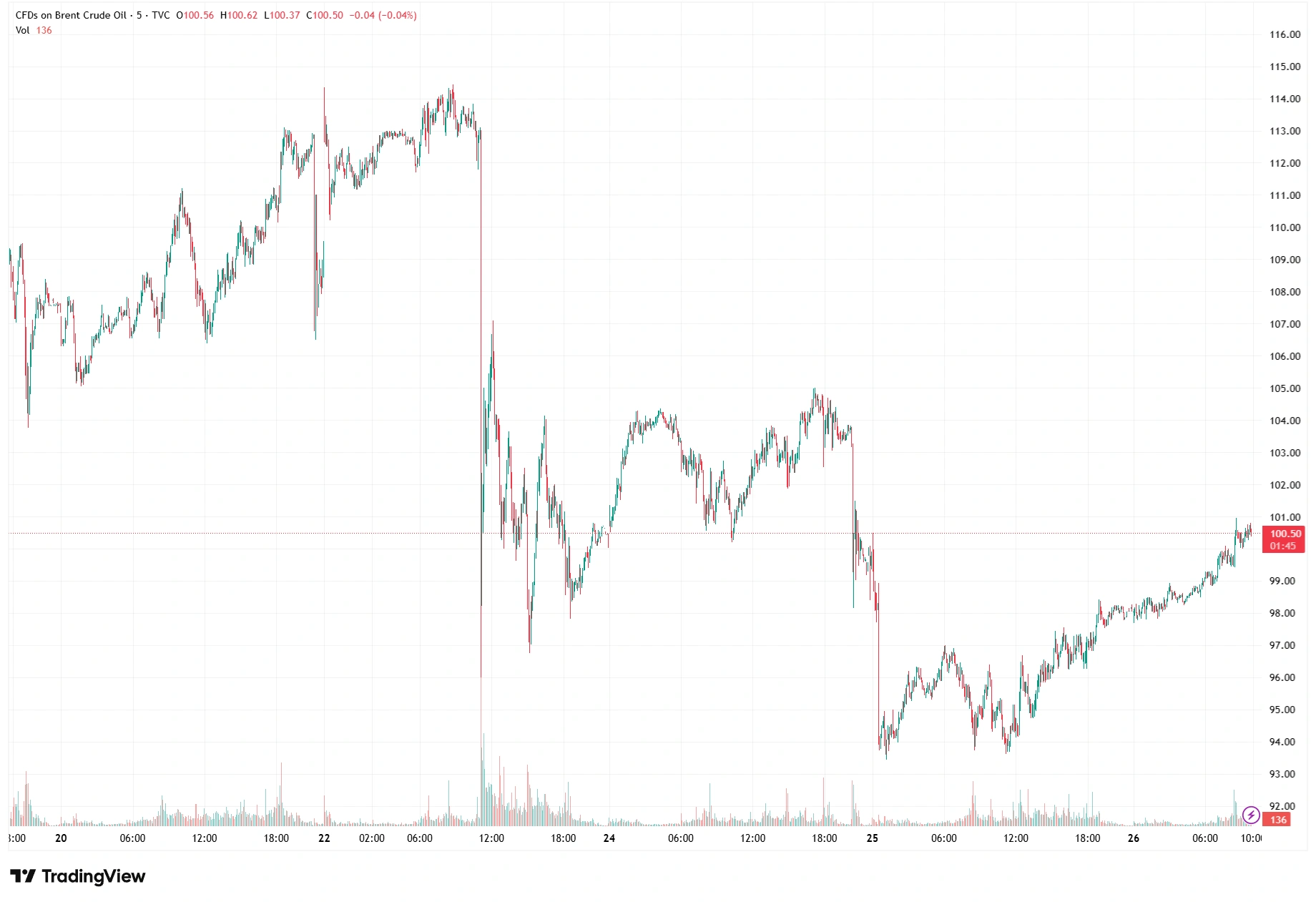
One of the main drivers this week was the sharp rise in oil prices following geopolitical tensions in the Middle East. Supply disruptions pushed energy prices higher, raising concerns that inflation could remain above central bank targets.
Energy costs feed into many parts of the economy. When oil prices rise, businesses face higher transport and production costs, which can eventually pass through to consumers.
WTI Crude Oil Price
Market Reaction
Bond markets reacted quickly. Government bond yields moved higher as investors adjusted expectations for inflation and interest rates. At the same time, equity markets weakened as traders reassessed the likelihood of rate cuts.
The overall move reflected a shift in expectations. Rather than focusing on easing policy, markets began to price in the possibility that inflation may stay elevated for longer.
Reserve Bank Of Australia Rate Decision
The Reserve Bank of Australia raised its policy rate by 25 basis points to 4.10%, pointing to ongoing inflation risks and a still resilient labour market.
Interest rate decisions are important because they influence borrowing costs, spending, and investment across the economy. Higher rates are typically used to slow demand and bring inflation under control.
Market Reaction
The Australian dollar strengthened following the decision, supported by higher interest rates. Bond yields also moved higher as markets adjusted to a more cautious policy outlook.
Equities, however, were more subdued. Higher borrowing costs can weigh on growth expectations and corporate earnings, which often limits upside in stock markets.
Japan Flash PMI Signals Slower Growth
Japan’s latest Purchasing Managers’ Index (PMI) data showed that economic activity continued to expand, but at a slower pace. The composite PMI fell to 52.5 from 53.9 in the previous month, suggesting that growth is moderating.
At the same time, businesses reported rising input costs, partly driven by higher energy prices. This combination of slower growth and rising costs creates a more complex outlook for policymakers.
Market Reaction
The reaction in currency markets was mixed. Slower growth initially weighed on the yen, but rising cost pressures supported the view that inflation could remain firm.
This highlights an important point for traders. Markets do not always react to data in a straightforward way. When signals are mixed, price action can be less directional.
US Economic Data and Federal Reserve Outlook
Recent US data also pointed to a mixed economic picture. Some indicators suggested that growth is slowing, while inflation remains relatively persistent.
This creates uncertainty around the path of monetary policy. If inflation stays elevated, the Federal Reserve may need to keep rates higher for longer. If growth weakens more sharply, the focus may shift towards supporting the economy.
Market Reaction
US Treasury yields moved higher overall, reflecting reduced expectations for near-term rate cuts. Equity markets were more cautious, with investors weighing the balance between growth and inflation risks.
What Traders Can Learn from the Economic Calendar
The economic calendar is not just a list of events. It is a tool for understanding how markets interpret new information.
Traders often focus on three key questions:
- How does the data compare to expectations?
- What does this mean for inflation and growth?
- How might central banks respond?
By thinking in these terms, it becomes easier to understand why markets move the way they do.
Economic releases can also increase short-term volatility. Being aware of upcoming data can help traders manage risk, whether that means adjusting position sizes or waiting for clearer direction after a release.
Bottom Line
This week’s economic data showed that markets are still navigating a complex environment. Rising oil prices increased inflation concerns, central bank decisions reflected caution, and business activity data pointed to slower growth.
For traders, the key takeaway is simple. Markets move on expectations. When new data changes the outlook for inflation, growth, or interest rates, prices adjust quickly.
Understanding this relationship can help traders interpret market reactions more clearly and make more informed decisions.