Why Strong Economic Data Can Be Bad for Markets


At first glance, strong economic data should be positive for financial markets. It suggests that the economy is growing, consumers are spending, businesses are expanding, and employment remains stable. In isolation, that is the kind of environment investors typically welcome. Yet markets do not always respond in the way many would expect. At times, strong data can lead to falling equity prices and rising volatility.
The reason lies in how markets interpret information. Investors are not simply reacting to whether the economy looks healthy today. They are trying to understand what that strength means for inflation, interest rates and the decisions central banks may take in response.
What Counts as Strong Economic Data?
In financial markets, “strong” data does not just mean a good number. It means data that comes in stronger than expected. Economic releases such as non-farm payrolls (NFP), inflation, retail sales, GDP and PMI readings are always measured against forecasts, and it is the gap between expectation and reality that drives market reactions.
A clear example came from the US labour market in early 2026. In February, NFP unexpectedly fell by 92,000, compared with expectations for an increase of around 50,000 to 60,000. At the same time, average hourly earnings rose by 0.4% MoM and 3.8% YoY, while the unemployment rate ticked up to 4.4%. While the headline jobs number appeared weak, the strength in wages suggested inflation pressures could remain persistent.
Because markets are forward-looking, the focus quickly shifted away from the headline and towards what the mix of data implied for inflation and policy.
Why Strong Data Can Worry Markets
When economic data consistently exceeds expectations, it can raise concerns that the economy is running too hot. Strong demand can keep inflation elevated, particularly when wage growth remains firm.
If inflation proves difficult to bring down, central banks like the Fed, ECB, or BoE may be forced to keep interest rates higher for longer. This is where markets begin to reprice the outlook.
Bond yields often adjust quickly in this environment. Nominal yields reflect both inflation expectations and real yields, and both tend to rise when investors anticipate tighter policy for an extended period. As yields move higher, borrowing costs increase, financial conditions tighten and liquidity becomes more constrained.
US 10-Year Treasury Yield Over the Past 12 Months
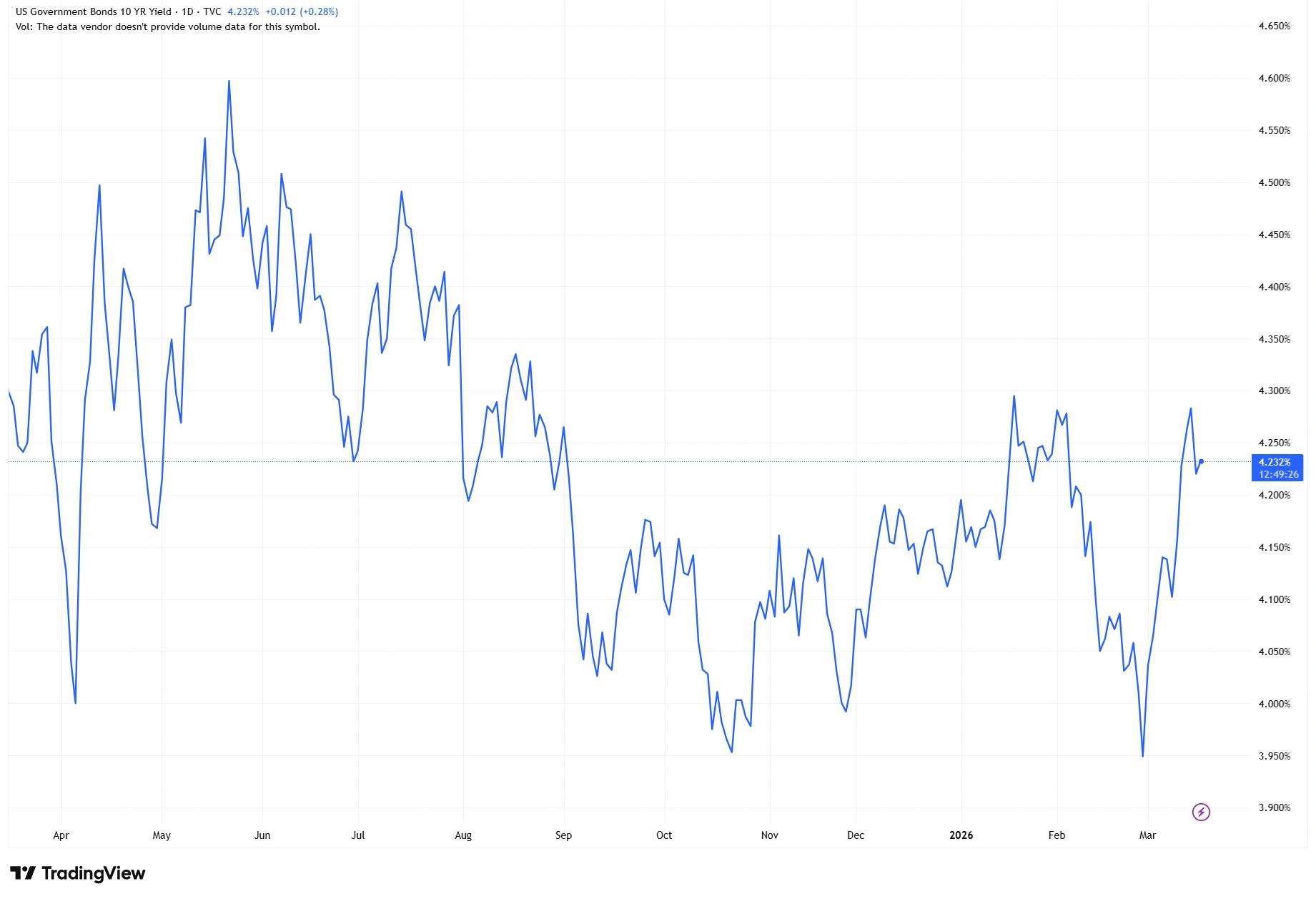
Source: TradingView. Past performance is not a reliable indicator of future performance. Data as of 17 March 2026.
US 10‑year Treasury yield over the past 12 months. Yields tend to rise when strong economic data leads investors to expect higher interest rates for longer.
Why Markets Can Fall on Good News
Markets are heavily driven by expectations. If investors are positioned for weaker data and potential rate cuts, stronger-than-expected releases can disrupt that view.
This often leads to a rapid repricing across asset classes. Bond yields may rise as traders push back expectations for policy easing, while equity markets may come under pressure. For equities, higher yields increase discount rates, which reduces the present value of future earnings. Even in a strong economic environment, this can weigh on valuations, particularly in growth sectors.
How Different Markets React
The impact of strong data can be seen across markets. Equity indices may struggle as rising yields weigh on valuations, while bond markets typically sell off as expectations for interest rates shift higher.
In currency markets, stronger data can support the domestic currency if it reinforces a relatively tighter policy outlook. After the February 2026 jobs report, the US dollar strengthened as Treasury yields rebounded, highlighting how currencies often respond to changing rate expectations.
Commodities tend to show a more mixed response. Stronger growth can support demand for industrial commodities, but higher real yields and a stronger currency can create headwinds, particularly for assets such as gold.
Why Context Matters
Strong economic data is not always negative for markets. If inflation is under control and central banks are comfortable with the outlook, stronger growth can support earnings and improve investor sentiment.
The more negative reaction tends to occur when markets are focused on inflation risks and the future path of interest rates. In those conditions, even positive economic surprises can lead to tighter financial conditions.
Bottom Line
Strong economic data can sometimes lead to weaker market performance because it changes expectations around monetary policy. When investors believe interest rates will remain higher for longer, bond yields tend to rise, financial conditions tighten and equity valuations can come under pressure.
Markets do not move based on whether news appears positive or negative in isolation. They move based on how that news reshapes the outlook.