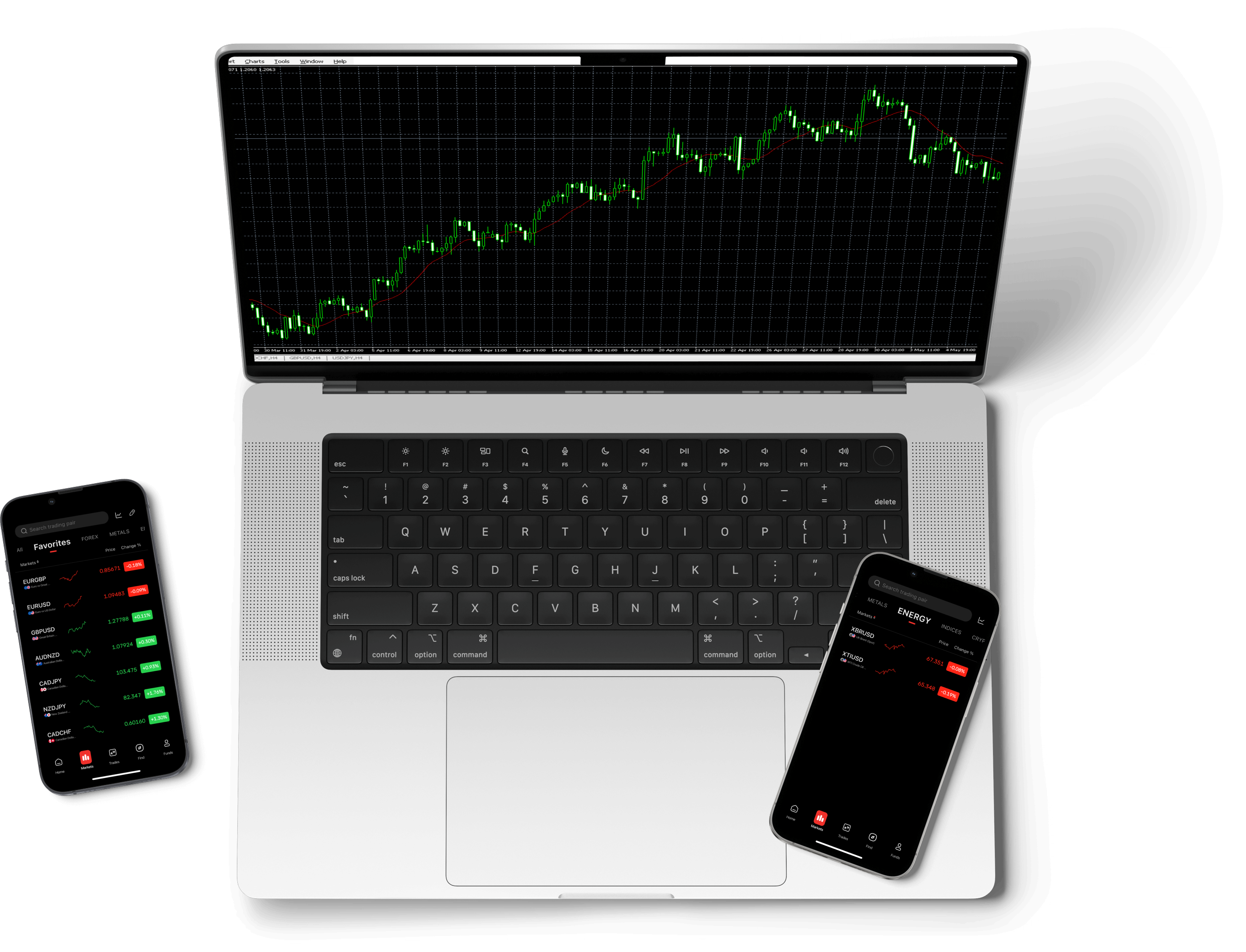
Energy

Capitalise on global market volatility with CFD 
trading on premier commodities like crude oil

Create an Account

Trading is risky. Proceed wisely

Energy Trading Conditions

Symbol Minimum Spread Average Spread Pip Value Min price movement Contract Value
XBRUSD
UK Brent (Spot)
0.04 0.042 10.00 0.001 1000 USD
XTIUSD
WTI Crude Oil Spot vs United States Doll
0.038 0.039 10.00 0.001 1000 USD
Symbol Minimum Spread Average Spread Pip Value Min price movement Contract Value
XBRUSD
UK Brent (Spot)
0.03 0.033 10.00 0.001 1000 USD
XTIUSD
WTI Crude Oil Spot vs United States Doll
0.028 0.028 10.00 0.001 1000 USD
Symbol Minimum Spread Average Spread Pip Value Min price movement Contract Value
XBRUSD
UK Brent (Spot)
0.03 0.032 10.00 0.001 1000 USD
XTIUSD
WTI Crude Oil Spot vs United States Doll
0.028 0.029 10.00 0.001 1000 USD

Tap Into The Power Of Energy
Markets!

Register

Why Trade Energy With EC Markets

Capitalize on Volatility

Hedge Against Losses

Harness Global Signals

Leverage Macroeconomics

Energy FAQ

Energy trading is the trading of a variety of energy related commodities like WTI Crude Oil, Brent Crude Oil, and natural gas. The market for these commodities is massive and traded 24/5. Due to the size of the energy trading markets, there is high liquidity and frequent price movements, which creates opportunities for traders, who can use instruments like CFDs (Contracts for Difference) to speculate on the price movements.

Energy trading includes several commodities like WTI Crude Oil, Brent Crude Oil, and Natural Gas. All of these commodities are essential components in the energy industry, and are amongst the most traded markets due to their high demand and price volatility.

Energy trading can be a good choice for beginner traders. Due to the importance of energy commodities in the global economy, there’s an abundance of educational information and trading signals available to help guide trading decisions. However, energy markets can also be quite volatile due to their reliance on many global macroeconomic factors, enhancing risk of loss. For this reason, it’s advisable for beginners to first familiarise themselves with energy trading by using a demo account.

There are a wide range of factors that affect the prices of commodities in energy trading. Such factors are global supply and demand, geopolitics, OPEC decisions, US inventory reports and weather patterns, economic growth forecasts, and interest rates. Staying informed of these factors enables traders to make more educated trading decisions.

Energy trading is especially popular among traders due to the deep liquidity and high volatility of the commodities. Deep liquidity means that the assets are easily bought and sold, enabling seamless entry and exit from the market. Meanwhile, volatility means the price fluctuates significantly, giving more chances for traders to speculate on price movements.

Trade Like a CHAMPION

Latest Insights

Energies

02 Mar 2026

Quality Leads While Geopolitics Sets the Oil Premium | Weekly Recap: 23-27 February 2026

Markets again asked investors to separate what moves prices from what merely makes headlines. In the US, the policy path stayed “restrictive but stable,” and that was enough to let styles do the heavy lifting: quality growth still drew a bid, but not at the expense of breadth.

Read More
Energies

24 Feb 2026

The Next Inflation Cycle: What Markets Are Missing About Sticky Prices

Headline inflation has cooled, but the last mile rarely runs in a straight line. US CPI slowed to 2.4% y/y in January 2026, down from 2.7% in December 2025; core CPI eased to 2.5% from 2.6%. These gains remain above target because the parts now doing the heavy lifting move slowly. The next phase is less about goods and more about services, wages, and supply frictions, which means prices tend to drift lower in steps rather than drop quickly.

Read More
Energies

23 Feb 2026

Rotation Builds as Policy Noise Meets Geopolitics | Weekly Recap: 16-20 February 2026

It was a week that invited investors to look past the headlines and focus on what really mattered. In the US, the Supreme Court struck down a set of emergency‑authority tariffs, briefly easing some pressure on import costs, but the administration quickly moved toward a new set of across‑the‑board duties. The result was a mixed picture rather than a clean shift, with markets weighing the possibility of some relief now against the chance of renewed pressure later. At the same time, US-Iran developments moved between diplomatic talks in Geneva and news of additional military assets heading toward the region, a combination that kept a modest premium under oil prices without unsettling broader risk sentiment.

Read More
Energies

16 Feb 2026

Data Softens; Policy Holds: A Market Leaning Toward Quality | Weekly Recap: 9-13 February 2026

It was a week that rewarded patience. In the US, January CPI rose 0.2% MoM and 2.4% YoY, a softer print signalling disinflation remains on track. The jobs report, released mid‑week instead of Friday, pointed to cooling without collapse, keeping focus on how far prices can ease before growth slows. Those signals nudged bond yields lower and steadied overall risk sentiment.

Read More
Energies

09 Feb 2026

Global Markets Pause as Investors Await Clearer Economic Signals | Weekly Recap: 2-9 February 2026

The week unfolded against a backdrop of mixed economic signals and cautious policy stances across major central banks. In the US, the temporary government shutdown meant the January Employment Situation report did not arrive as planned, leaving investors without one of the week’s most closely watched data points. The Bureau of Labor Statistics confirmed the release would be rescheduled once funding resumed. This created a quieter information environment, with markets leaning more on surveys and company guidance than usual.

Read More
Read More