Financial markets move for a reason, and very often that reason is already scheduled on the economic calendar. Interest rate decisions, inflation updates, employment data and growth releases are among the strongest catalysts of volatility across forex, indices, commodities and crypto. The economic calendar brings these events together in one place, giving traders the advantage of preparation rather than surprise. Understanding how to interpret this tool is an essential part of trading with intention and clarity.
Bitcoin’s latest drop felt like the market hitting a reset button after running too hot. It had just set a record high near $126,198 on October 6, 2025, and then slid into the $66,000 to $68,000 range by mid to late February 2026, which is roughly a 50 percent pullback in a short window. Many outlets compared the retreat to the sharp moves seen after the FTX collapse, especially once Bitcoin slipped below the key $70,000 level.
Bitcoin’s journey through early 2026 has been a story of strong momentum, sudden reversal, and a market now trying to find its footing again. After a powerful move into mid‑January that pushed prices close to $98,000, the trend flipped sharply, leaving many investors wondering what triggered the shift and where things stand today.
Super Bowl 2026 is officially in the books. The confetti have fallen, the trophy has been lifted, and once again a familiar Wall Street question surfaces:
The week unfolded against a backdrop of mixed economic signals and cautious policy stances across major central banks. In the US, the temporary government shutdown meant the January Employment Situation report did not arrive as planned, leaving investors without one of the week’s most closely watched data points. The Bureau of Labor Statistics confirmed the release would be rescheduled once funding resumed. This created a quieter information environment, with markets leaning more on surveys and company guidance than usual.
According to the Finance Magnates Q4 2025 Intelligence Report, EC Markets recorded $4.476 trillion in total trading volume, maintaining our position as a Top 3 global broker and closing the year with our strongest quarterly performance to date.
On major decision days, FX charts often appear unusually calm as the market hovers in tight ranges. Then, almost instantly, it turns into chaos. Central bank meetings from the Fed, ECB, or BoE compress a huge amount of macroeconomic expectation into a few minutes of statements, projections, and press-conference remarks. Once released, the market absorbs this information in a single burst, and price action reacts accordingly.
In finance, the yield curve shows how much it costs the US government to borrow for different lengths of time. Most people hear about it only when it inverts, when short‑term rates rise above long‑term ones, because that pattern has historically appeared before recessions. But the yield curve is doing much more than flashing warnings. It is telling a story about how markets see growth, inflation, and future Fed policy.
As 2025 drew to a close, markets continued to digest the after-effects of aggressive policy shifts in prior years. Q4 2025 didn’t bring new shocks but instead reinforced themes that had been building throughout the year. The quarter provided a moment of relative stability across asset classes, with monetary policy becoming clearer but fiscal constraints coming into sharper focus. This piece explores how Q4 played out across markets, what 2025 taught investors more broadly, and what 2026 may have in store – through a lens of cautious realism rather than bold forecasting.
Markets closed out the penultimate full trading week of 2025 grappling with a defining theme: policy divergence. Despite several potential volatility catalysts, investors largely held existing positioning, with mixed US macro data failing to force a meaningful repricing into year-end.
Markets ended the final week of November on firmer footing as investors priced in a growing likelihood of a Federal Reserve rate cut at the December 9-10 meeting. Softer US data following the post-shutdown backlog and easing Treasury yields helped shift sentiment toward a more dovish outlook.
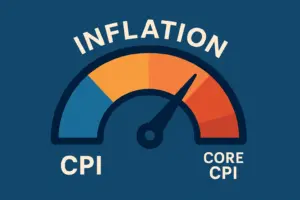
Inflation is a driver of markets. When new inflation numbers come out each month, traders of currencies, stocks, bonds and commodities all pay attention. A sudden rise or fall in inflation can quickly change expectations for interest rates and move markets.
Bitcoin has taken a sharp turn lower after hitting an all-time high near $126,000 in October. Today, it’s trading below $95,000, which is a drop of about 25%.
Central banks are shifting gears. The Fed, ECB, and BoE have all turned more dovish heading into the end of 2025, and rate cuts are now widely expected. Inflation is cooling slowly but steadily, and bond yields are drifting lower. On paper, this should be a sweet spot for low-duration stocks: financials, energy, and defensives that lean on near-term cash flows rather than long-term growth stories.
Success in trading rarely happens by accident. It usually grows out of doing the right things, over and over again. That’s where having a routine makes all the difference.
Bitcoin’s done it again – shot past the $125,000 mark and shook the market. In just a few days, it’s jumped roughly 14%, sending volatility right back to the levels we haven’t seen in months. The mood’s flipped fast – from cautious to full-on excited – with everyone pointing fingers at ETF inflows, safe-haven demand, and a wave of institutional buying.
Bitcoin’s done it again! Another record broken! The world’s biggest cryptocurrency just punched through the $125,000 mark, and that milestone’s got you and I buzzing. It’s been a fast move too, roughly 14% in just a few days, enough to wake up even the quiet corners of the market.
When Liverpool FC signed Swedish striker Alexander Isak, the football world took notice, it was a strategic move that showed how champion teams are built with precision and long term planning. In many ways, the process of creating a successful football squad is very similar to how traders build a winning portfolio in the financial markets.
Markets spent the week waiting for Jackson Hole, and Powell didn’t disappoint. His message was softer than many feared: the Fed now sees the balance of risks shifting, and he even opened the door to a September cut. That was enough to steady nerves after five straight down sessions for Wall Street. By Friday, the Dow was at record highs, the S&P 500 rose, and only the Nasdaq lagged as tech finally cooled.
Every trading community, from the smallest retail account to the largest institutional desk, confronts a universal scarcity: finite capital set against infinite market uncertainty.
Bitcoin has gained nearly 20% year-to-date, breaking out past $112,000 on July 9 amid rising institutional interest and broader risk-on sentiment. As of July 11, it’s trading around $117,745.
In a historic moment for the crypto world, Coinbase Global Inc. (NASDAQ: COIN), one of the biggest cryptocurrency platforms, has officially joined the S&P 500 – an exclusive list of the 500 most valuable public companies in the US.