Breaking Financial Glass Ceilings: How Women Can Build Multiple Income Streams


For decades, finance and investing were widely perceived as male-dominated arenas. Investment decisions were often delegated to advisers or partners, while women were positioned as managers of household budgets rather than long-term wealth builders.
That narrative is changing, rapidly.
Across the world, women are taking greater control of their financial futures. They are investing, trading financial markets, launching businesses, and designing diversified income streams that go beyond traditional career structures.
This shift represents more than financial participation. It signals a broader movement toward financial independence, autonomy, and long-term wealth creation.
Today, women are not just managing money.
They are building financial ecosystems designed to support flexibility, opportunity, and resilience.
The Rise of Women in Wealth Creation
Globally, women already control a growing share of private wealth, and that influence is expected to expand significantly in the coming years.
Studies suggest women currently control around one-third of global wealth, a figure projected to grow substantially as more women invest, inherit assets, and take active roles in financial decision-making.
At the same time, structural inequalities remain.
Women represent more than half of the global workforce, yet hold only around 19% of C-suite roles in financial sectors, and just 10.4% of Fortune 500 CEOs are women.
Women also continue to face financial disparities such as pay gaps and reduced access to investment capital.
These barriers are often described as the financial glass ceiling, invisible limitations that restrict access to higher income, financial leadership, and advanced investment opportunities.
Breaking through these barriers requires more than representation. It requires a new approach to wealth building.
Why Multiple Income Streams Matter
Traditional career models rely heavily on a single source of income, a salary. But for many people, particularly women navigating career breaks, caregiving responsibilities, or unequal pay structures, relying on one income stream can create financial vulnerability.
As a result, the concept of multiple income streams has gained increasing attention.
Rather than depending entirely on employment income, individuals can design a financial framework that includes several complementary sources of revenue.
The benefits are significant:
- Greater financial independence
- Protection against job loss or economic downturns
- Faster progress toward long-term goals
- Increased financial resilience
- Reduced reliance on a single employer or income source
Multiple income streams are not necessarily about working more hours. They are about designing income differently.
Designing a Portfolio of Income
Financial independence rarely comes from a single source. Instead, it is typically built through a combination of income types.
Active Income
Active income is generated through work that requires direct time and effort. For many individuals, this forms the financial foundation that enables investing and wealth building.
Examples include:
- Professional services
- Consulting
- Freelancing
- Coaching or mentoring
- Entrepreneurship
Active income often provides the capital needed to begin investing and building additional financial streams.
Semi-Passive Income
Semi-passive income involves activities that require initial effort but can generate income over time with less ongoing involvement.
Examples include:
- Trading financial markets
- Affiliate marketing
- Creating online courses or digital products
- Investing in businesses
Trading has become significantly more accessible in recent years due to advances in digital trading platforms, financial education, and global market access.
Many individuals adopt strategies such as swing trading or long-term portfolio investing, allowing them to participate in markets without needing to trade full-time.
Passive Income
Passive income involves investments designed to generate returns with minimal ongoing effort.
Common examples include:
- Dividend-paying stocks
- Exchange-traded funds (ETFs)
- Real estate investment trusts (REITs)
- Intellectual property or digital products
Many new investors gravitate toward ETFs and diversified funds because they offer lower costs, transparency, and built-in diversification, making them a popular entry point into investing.
Trading as a Gateway to Financial Autonomy
One of the reasons trading has attracted growing interest is its accessibility.
Unlike traditional financial careers, trading does not require a specific academic background or institutional connections. Instead, success is typically built through education, discipline, and risk management.
For many women, trading offers several advantages:
- Flexible schedules
- Global market access
- Low barriers to entry
- Scalable income potential
Research also suggests women often approach investing with a measured and disciplined mindset, focusing on long-term goals and careful risk assessment.
Rather than being risk-averse, many experts describe female investors as risk-aware, seeking to fully understand an investment before committing capital. In financial markets, this thoughtful approach can be a significant advantage.
Women Leading the Conversation in Finance
As more women enter the world of investing and financial markets, new voices are helping shape the conversation around financial empowerment.
One example is our very own Rocío Romero Portilla,Team Leader, who recently spoke at Rankia Mujeres en Finanzas 2026, an online event highlighting women helping to shape the future of finance across Latin America.
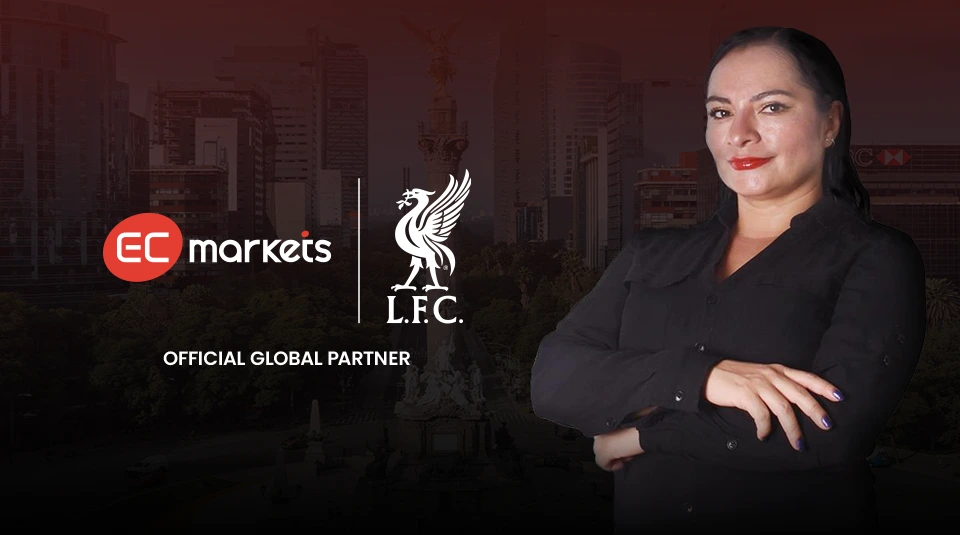
Her presentation focused on the importance of financial education, diversified income streams, and expanding access to financial tools that allow individuals to participate more actively in wealth creation.
“Women don’t just manage resources, they multiply them.”
Her message reflected a broader shift taking place across the financial landscape: women are increasingly building income through a combination of professional careers, investing, trading, and entrepreneurship.
Key Insights from Rankia Mujeres en Finanzas 2026
Several important themes emerged from the discussion around financial empowerment and income diversification. Financial Education Is the Starting Point
Confidence in investing begins with knowledge. Access to financial education allows individuals to understand markets, manage risk, and make informed financial decisions.
Expanding financial literacy remains one of the most effective ways to reduce wealth inequality.
Diversification Reduces Financial Pressure
Building multiple income streams helps ensure that no single job or investment carries all the financial responsibility.
A diversified financial structure can include employment income, investments, trading strategies, and entrepreneurial ventures.
Community and Mentorship Matter
Support networks play an important role in financial empowerment. Mentorship, educational communities, and shared learning environments can help demystify financial markets and encourage more people to participate in investing.
Technology Is Expanding Access to Markets
Digital trading platforms, financial applications, and online learning resources have dramatically lowered the barriers to entry for investors.
These tools allow individuals to research markets, monitor portfolios, and build investment strategies independently.
The Future of Women in Finance
The financial landscape is evolving.
Women are increasingly participating in financial markets, launching businesses, building investment communities, and reshaping how wealth is created and managed.
Breaking financial glass ceilings is not about abandoning traditional careers.
It is about expanding financial possibilities.
By combining professional income with investments, trading strategies, and entrepreneurial ventures, women are building diversified financial ecosystems designed for long-term stability and independence.
And as more women participate in finance, the industry itself becomes stronger, more diverse, and more inclusive.
FAQs
What are multiple income streams?
Multiple income streams refer to earning money from several sources rather than relying on a single salary. These sources can include employment income, investments, trading, business ownership, or passive income such as dividends or digital products.
Why are multiple income streams important for financial independence?
Relying on a single income source can create financial vulnerability. Diversifying income streams provides greater stability, reduces financial risk, and can accelerate wealth building over time.
Why are more women investing today?
Greater access to financial education, digital investment platforms, and online trading tools has made financial markets more accessible. As a result, more women are actively investing and building diversified portfolios.
What investments are popular among women?
Many female investors favour diversified investments such as broad market funds, dividend-paying stocks, and real estate because they offer transparency, lower risk, and long-term stability compared with more speculative investments.