














أسعار الفائدة مقابل التضخم: كيف توجه البنوك المركزية الاقتصاد


يشكل التضخم وأسعار الفائدة تقريبًا كل جزء من الاقتصاد، من تكاليف الاقتراض وعوائد الادخار إلى أسواق الإسكان، ونشاط الأعمال، والأسواق المالية. وبينما تتم مناقشة قرارات البنوك المركزية غالبًا في العناوين الرئيسية، إلا أن تأثيرها يمتد إلى ما هو أبعد من الاقتصاد فقط. يمكن أن تؤثر التغيرات في أسعار الفائدة على سلوك الإنفاق، وقرارات الاستثمار، وثقة السوق، وسرعة النمو الاقتصادي بشكل عام.
فهم كيفية تفاعل التضخم وأسعار الفائدة يمكن أن يساعد في تفسير سبب بقاء سياسة البنك المركزي واحدة من أكثر المحركات متابعة في الأسواق المالية اليوم.
ما هو التضخم؟
يشير التضخم إلى الارتفاع التدريجي في أسعار السلع والخدمات مع مرور الوقت.
مع ارتفاع الأسعار، تنخفض القوة الشرائية، أي أن نفس المبلغ من المال يشتري أقل مما كان عليه سابقًا.
يختبر معظم الناس التضخم من خلال النفقات اليومية. تصبح البقالة أكثر تكلفة، وترتفع أسعار الوقود، وتزداد الإيجارات، وتزداد فواتير المنازل مع مرور الوقت.
يمكن أن يتطور التضخم لعدة أسباب، منها قوة الطلب الاستهلاكي، واضطرابات سلاسل التوريد، ونقص العمالة، وارتفاع تكاليف الطاقة.
أصبح هذا الارتباط واضحًا بشكل خاص خلال موجة التضخم في عام 2022، عندما ارتفع التضخم في العديد من الاقتصادات المتقدمة بشكل حاد.
في المملكة المتحدة، بلغ تضخم مؤشر أسعار المستهلكين (CPI) 11.1% في أكتوبر 2022، وهو أعلى مستوى له منذ حوالي 40 عامًا.
ما هي أسعار الفائدة؟
تمثل أسعار الفائدة تكلفة اقتراض المال والعائد المكتسب على المدخرات.
تحدد البنوك المركزية أسعار الفائدة المرجعية التي تؤثر على تكاليف الإقراض والاقتراض في النظام المالي الأوسع.
عندما ترفع البنوك المركزية أسعار الفائدة، يصبح الاقتراض عادة أكثر تكلفة. يمكن أن ترتفع أقساط الرهن العقاري، وتصبح القروض أغلى، وقد تصبح الشركات أكثر حذرًا بشأن خطط التوسع.
يمكن أن تؤدي الأسعار الأعلى أيضًا إلى تحسين عوائد حسابات الادخار والاستثمارات ذات الدخل الثابت.
تعمل أسعار الفائدة المنخفضة في الاتجاه المعاكس. فهي مصممة لتشجيع الاقتراض والإنفاق والاستثمار من خلال جعل الائتمان أرخص وأكثر سهولة.
تستهدف معظم البنوك المركزية الكبرى معدل تضخم حول 2% على المدى المتوسط في محاولة للحفاظ على استقرار الأسعار.
كيف تتفاعل أسعار الفائدة والتضخم
عندما يرتفع التضخم بسرعة كبيرة، غالبًا ما تزيد البنوك المركزية أسعار الفائدة لإبطاء الطلب في الاقتصاد.
إذا أصبح الاقتراض أكثر تكلفة، قد تنفق الأسر والشركات أقل، مما يساعد على تقليل الضغط التصاعدي على الأسعار مع مرور الوقت.
على سبيل المثال، قد يواجه أصحاب المنازل الذين يعيدون تمويل الرهون العقارية خلال دورة التشديد أقساطًا شهرية أعلى، بينما قد تؤجل الشركات خطط التوسع إذا أصبحت تكاليف التمويل مرتفعة جدًا.
ومع ذلك، يواجه صانعو السياسات معضلة صعبة.
يمكن أن يؤدي رفع الأسعار بشكل مفرط إلى إبطاء النمو الاقتصادي بشكل حاد وزيادة مخاطر الركود. وفي الوقت نفسه، قد يؤدي خفض الأسعار في وقت مبكر جدًا إلى بقاء التضخم مرتفعًا لفترة أطول.
من المهم أن تغييرات السياسة النقدية لا تؤثر على الاقتصاد فورًا. فقد يستغرق الأمر عدة أشهر حتى تنتقل تأثيرات الأسعار الأعلى أو الأقل إلى الاقتصاد الأوسع.
كيف تتفاعل الأسواق المالية
تعد الأسواق المالية شديدة الحساسية لتوقعات أسعار الفائدة لأن الأسواق بطبيعتها تركز على المستقبل.
يتفاعل المستثمرون ليس فقط مع القرارات الفعلية للسياسة، بل أيضًا مع ما تشير إليه البنوك المركزية حول ما قد يحدث لاحقًا.
يمكن أن تستجيب الأسهم والسندات والسلع والعملات بطرق مختلفة حسب كيفية تفسير الأسواق لرسائل البنوك المركزية.
تاريخيًا، غالبًا ما شهدت أسواق الأسهم فترات من التقلبات الشديدة خلال دورات التشديد القوية.
لهذا السبب يصف المحللون صانعي السياسات غالبًا بأنهم “متشددون” أو “معتدلون”.
يركز البنك المركزي المتشدد عمومًا على السيطرة على التضخم وقد يفضل سياسة نقدية أكثر تشددًا أو أسعار فائدة أعلى.
أما البنك المركزي المعتدل فعادة ما يركز أكثر على دعم النمو الاقتصادي والتوظيف من خلال خفض تكاليف الاقتراض.
خلال فترات عدم اليقين، غالبًا ما تجذب الأصول الدفاعية مثل الذهب طلبًا متزايدًا كملاذ آمن.
خلال الاضطرابات العالمية في عام 2020، ارتفع متوسط أسعار الذهب من حوالي 1,395 دولارًا للأونصة في 2019 إلى حوالي 1,777 دولارًا للأونصة في العام التالي.
معدل الفائدة الفعلي للأموال الفيدرالية مقابل مؤشر S&P 500 (2021-2026)
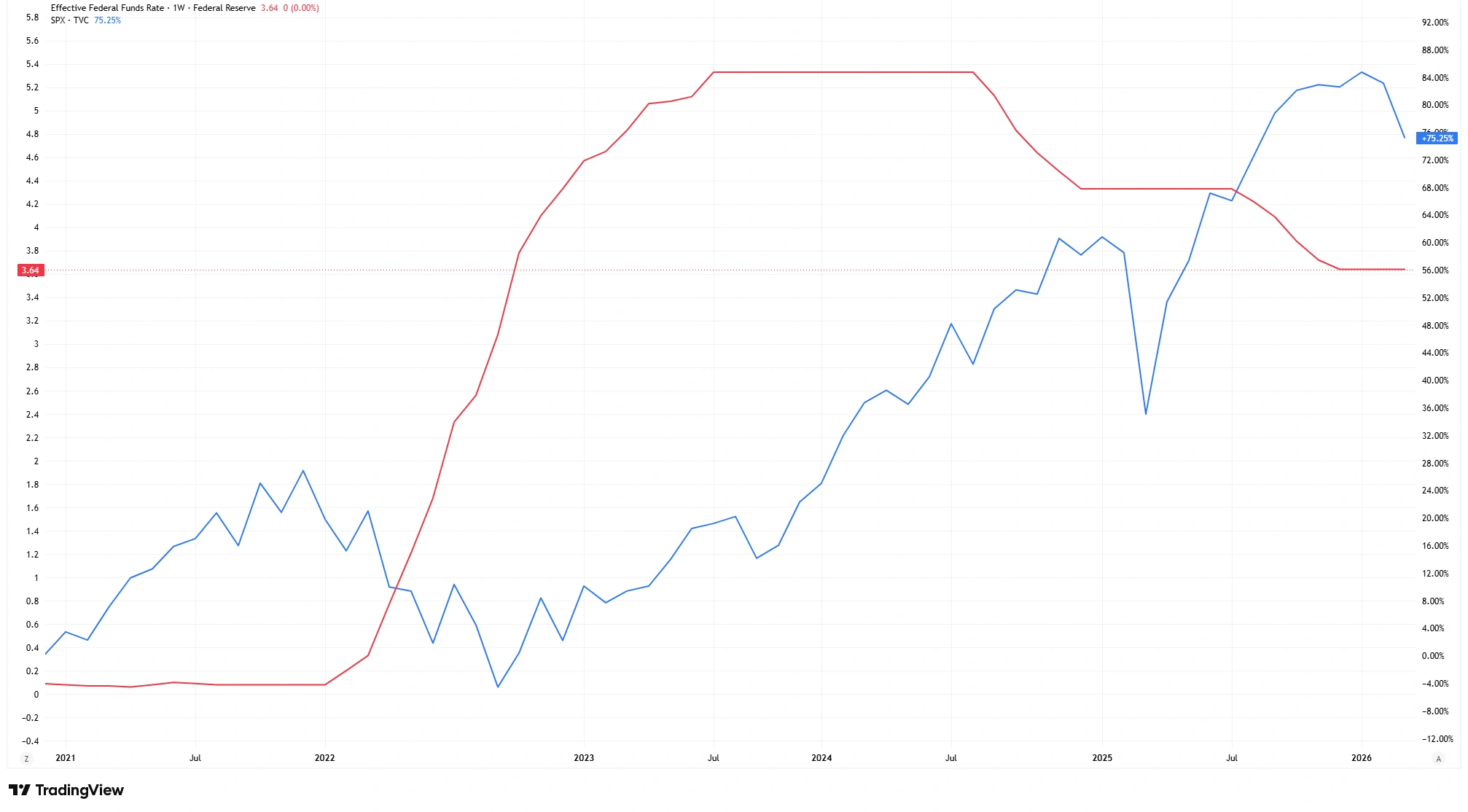
المصدر: TradingView. الأداء السابق ليس مؤشرًا موثوقًا للأداء المستقبلي. البيانات حتى 21 مايو 2026.
توضح مقارنة معدل الفائدة الفعلي للأموال الفيدرالية ومؤشر S&P 500 كيف يمكن أن تؤثر التغيرات في توقعات أسعار الفائدة على أداء السوق بشكل عام.
لماذا فهم دورات أسعار الفائدة مهم
تؤثر أسعار الفائدة على أكثر من مجرد الأسواق المالية.
فهي تؤثر على نشاط الإسكان، وعوائد الادخار، وثقة الأعمال، وإنفاق المستهلكين، والنمو الاقتصادي بشكل عام.
بالنسبة للمدخرين، قد تحسن بيئة أسعار الفائدة المرتفعة العوائد على الودائع النقدية والسندات الحكومية.
أما بالنسبة للمقترضين، فقد تؤدي الأسعار الأعلى إلى زيادة تكاليف خدمة الديون وتقليل القدرة على تحملها.
تتفاعل قطاعات الاقتصاد المختلفة أيضًا بشكل مختلف مع تغير ظروف أسعار الفائدة.
قد تواجه شركات التكنولوجيا والشركات التي تركز على النمو ضغوطًا أكبر خلال فترات ارتفاع الأسعار لأن التمويل يصبح أكثر تكلفة، بينما قد تثبت القطاعات الدفاعية أنها أكثر مرونة.
فهم هذه الدورات لا يتعلق بتوقع الأسواق بدقة، بل ببناء وعي بكيفية تشكيل السياسات الاقتصادية للظروف المالية مع مرور الوقت.
الخلاصة
تستخدم البنوك المركزية أسعار الفائدة كواحدة من أدواتها الرئيسية لإدارة التضخم والحفاظ على الاستقرار الاقتصادي.
وبينما تُتخذ هذه القرارات على مستوى المؤسسات، إلا أنها تؤثر بشكل مباشر على تكاليف الاقتراض، وعوائد الادخار، ونشاط الأعمال، وسلوك الأسواق المالية.
يمكن أن يساعد فهم كيفية تفاعل التضخم وأسعار الفائدة القراء على تفسير الأخبار الاقتصادية وحركات السوق بمزيد من الوضوح والرؤية.
الأسئلة الشائعة حول أسعار الفائدة والتضخم
ما هو التضخم ببساطة؟
التضخم هو الارتفاع التدريجي في أسعار السلع والخدمات مع مرور الوقت، مما يقلل من القوة الشرائية.
لماذا ترفع البنوك المركزية أسعار الفائدة؟
عادة ما ترفع البنوك المركزية أسعار الفائدة لإبطاء التضخم من خلال تقليل الاقتراض والإنفاق في الاقتصاد.
كيف تؤثر أسعار الفائدة الأعلى على الرهون العقارية؟
يمكن أن تؤدي أسعار الفائدة الأعلى إلى زيادة أقساط الرهن العقاري، خاصة للمقترضين ذوي القروض المتغيرة أو المعاد تمويلها حديثًا.
لماذا تتفاعل أسواق الأسهم مع قرارات أسعار الفائدة؟
تؤثر أسعار الفائدة على تكاليف الاقتراض، وتقييمات الشركات، وثقة المستثمرين، مما يمكن أن يؤثر بشكل كبير على الأسواق المالية.
ماذا تعني مصطلحات متشدد ومعتدل؟
يركز البنك المركزي المتشدد على السيطرة على التضخم من خلال سياسة أكثر تشددًا، بينما يركز البنك المركزي المعتدل أكثر على دعم النمو الاقتصادي والتوظيف.