













Riscos de Negociação de CFDs Explicados: O Que Todo Trader Deve Saber


Índice
- Quais São os Riscos da Negociação de CFDs?
- Por Que a Negociação de CFDs é Considerada de Maior Risco?
- Risco de Mercado
- Risco de Alavancagem
- Risco de Volatilidade
- Risco de Gap
- Risco de Liquidez
- Risco de Margem
- Risco Psicológico
- Como os Traders Gerenciam o Risco
- Erros Comuns a Evitar
- CFDs São Adequados para Todo Trader?
- Considerações Finais
Compreender os riscos da negociação de CFDs é uma parte essencial para se tornar um trader disciplinado. Os Contratos por Diferença (CFDs) permitem que os traders especulem sobre os movimentos de preços dos mercados financeiros sem possuir o ativo subjacente. Embora os CFDs ofereçam flexibilidade e acesso a uma ampla gama de mercados globais, eles também envolvem riscos que todo trader deve entender antes de abrir uma posição. Compreender esses riscos não significa evitar os CFDs completamente. Em vez disso, ajuda os traders a tomar decisões mais informadas, gerenciar sua exposição de forma adequada e reconhecer que o sucesso na negociação está tanto em gerenciar riscos quanto em identificar oportunidades de negociação.
Este guia explora os principais riscos associados à negociação de CFDs e explica como os traders podem compreendê-los e gerenciá-los melhor.
Quais São os Riscos da Negociação de CFDs?
O risco de CFD refere-se à possibilidade de perder dinheiro ao negociar Contratos por Diferença. Como qualquer produto financeiro, os CFDs são influenciados por movimentos de mercado que não podem ser previstos com certeza.
Embora os traders frequentemente foquem nos lucros potenciais, é igualmente importante entender os fatores que podem levar a perdas. Condições de mercado, alavancagem e eventos inesperados podem afetar o resultado de uma negociação.
Reconhecer esses riscos permite que os traders desenvolvam expectativas realistas e construam hábitos de negociação mais disciplinados.
Por Que a Negociação de CFDs é Considerada de Maior Risco?
Uma das principais razões pelas quais os CFDs são considerados de maior risco é que eles são comumente negociados utilizando alavancagem.
A alavancagem permite que os traders tenham exposição a uma posição de mercado maior comprometendo apenas uma parte do valor total da negociação como margem. Embora isso possa aumentar os retornos potenciais, também amplia as perdas potenciais.
Além disso, os mercados de CFD podem reagir rapidamente a notícias econômicas, anúncios de resultados, desenvolvimentos geopolíticos e mudanças no sentimento dos investidores, às vezes resultando em movimentos de preços significativos em curtos períodos.
Como os CFDs são frequentemente negociados com alavancagem, movimentos relativamente pequenos do mercado podem ter um impacto muito maior na conta do trader do que ao comprar o ativo subjacente diretamente.
Por esses motivos, entender o risco é tão importante quanto entender como funcionam os CFDs.
Risco de Mercado
O risco de mercado é a possibilidade de que o preço de um instrumento financeiro se mova em uma direção desfavorável após a abertura de uma negociação.
Os mercados financeiros são influenciados por diversos fatores, incluindo dados econômicos, desempenho de empresas, decisões sobre taxas de juros, eventos geopolíticos e o sentimento geral dos investidores.
Como esses eventos não podem ser previstos com certeza, toda negociação de CFD carrega algum grau de risco de mercado.
Risco de Alavancagem
A alavancagem aumenta a exposição ao mercado, mas também aumenta o impacto dos movimentos de preços na conta do trader.
Um movimento relativamente pequeno no mercado subjacente pode gerar um ganho ou perda proporcionalmente maior, pois o trader está controlando uma posição maior do que o capital inicialmente depositado.
Por isso, a alavancagem deve sempre ser usada com cautela e em conjunto com técnicas adequadas de gerenciamento de risco.
Um Exemplo Simples de Risco de Alavancagem
Imagine que um trader abre uma posição de CFD no valor de £10.000.
Se o mercado cair 2%, a posição perde £200.
Se o trader estiver usando alavancagem e tiver depositado apenas £1.000 como margem, o mercado ainda se moveu apenas 2%, mas a perda de £200 representa 20% do capital depositado pelo trader.
Este exemplo ilustra por que até mesmo movimentos relativamente pequenos do mercado podem ter um impacto significativo ao negociar produtos alavancados.
Risco de Volatilidade
Volatilidade refere-se à velocidade e magnitude dos movimentos de preços.
Alguns mercados apresentam flutuações de preços relativamente estáveis, enquanto outros podem se mover rapidamente em curtos períodos.
Períodos de maior volatilidade podem criar mais oportunidades de negociação, mas também aumentam a incerteza e a probabilidade de ganhos ou perdas maiores em um curto espaço de tempo.
Risco de Gap
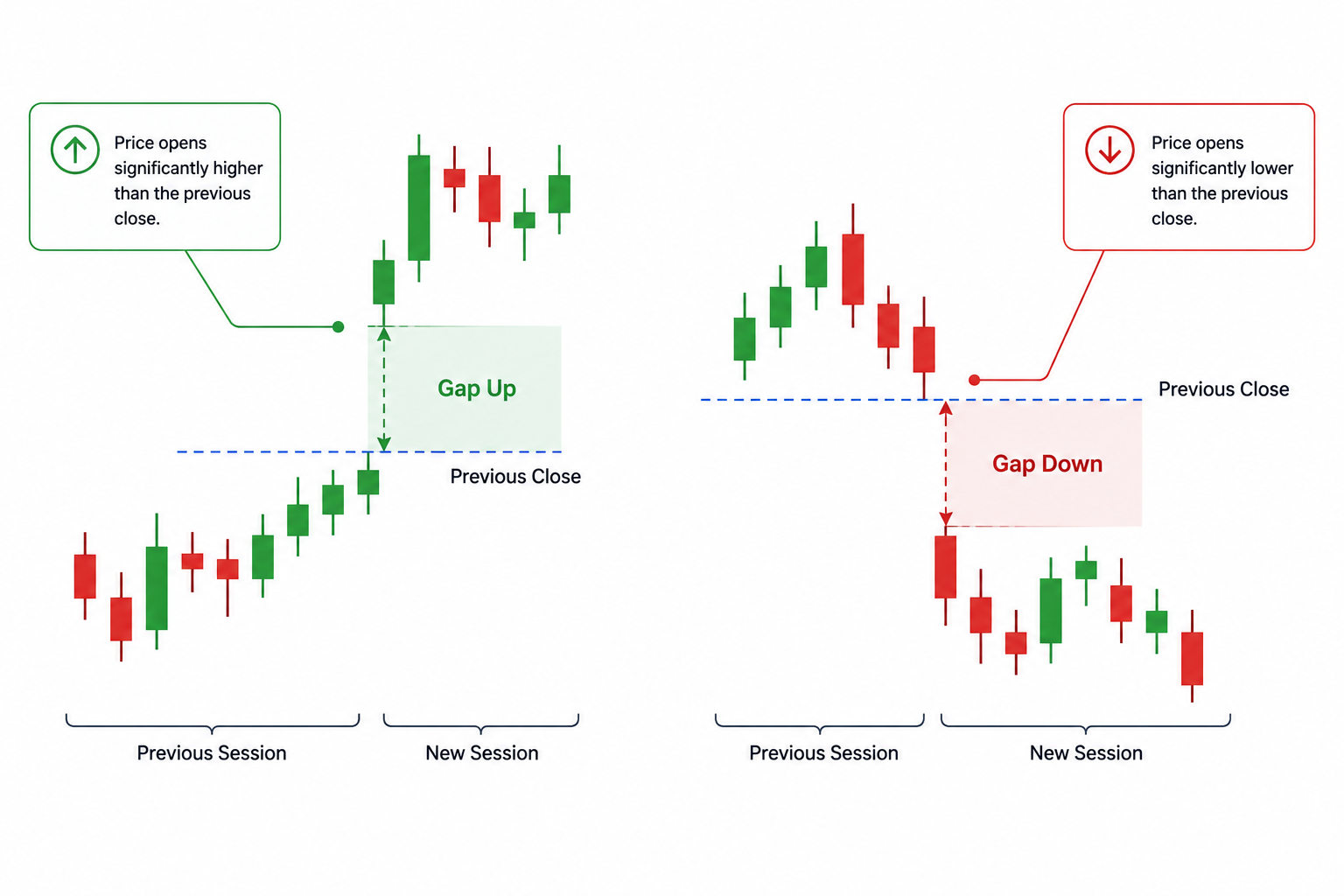
Os mercados financeiros nem sempre se movem em uma sequência contínua de preços.
Às vezes, os preços abrem significativamente mais altos ou mais baixos do que o preço de fechamento anterior após anúncios importantes, divulgações de resultados ou eventos que ocorrem enquanto o mercado está fechado.
Isso é conhecido como gap de preço.
Nessas situações, as negociações podem ser executadas a um preço diferente do esperado, aumentando o potencial para perdas inesperadas.
Risco de Liquidez
Liquidez refere-se à facilidade com que compradores e vendedores podem negociar um ativo.
Mercados altamente líquidos geralmente permitem que as negociações sejam executadas rapidamente e próximas ao preço esperado.
Mercados menos líquidos podem apresentar spreads mais amplos ou movimentos de preços maiores, especialmente durante períodos de menor atividade ou eventos de mercado significativos.
Durante mercados em rápida movimentação, as negociações também podem ser executadas a preços ligeiramente diferentes dos solicitados. Isso é comumente conhecido como slippage.
Compreender a liquidez pode ajudar os traders a entender por que os preços de execução às vezes diferem das expectativas.
Risco de Margem
Os CFDs são negociados utilizando margem, ou seja, os traders depositam apenas uma porcentagem do valor total da posição.
Se as perdas de mercado reduzirem os fundos disponíveis em uma conta de negociação abaixo do nível de margem exigido, fundos adicionais podem ser necessários ou as posições podem ser fechadas automaticamente.
A margem não deve ser vista como um limite para o valor que pode ser perdido. Dependendo do ambiente regulatório, tipo de conta e condições de mercado, as perdas podem exceder a margem inicial depositada.
Compreender como a margem funciona é essencial antes de negociar produtos alavancados.
Risco Psicológico
O sucesso na negociação envolve mais do que analisar gráficos e dados de mercado.
Emoções como medo, ganância, frustração e excesso de confiança podem influenciar as decisões de negociação, especialmente durante períodos de volatilidade do mercado.
Alguns traders podem aumentar o tamanho das posições após perdas, fechar negociações lucrativas cedo demais ou ignorar completamente seu plano de negociação.
Manter a disciplina e seguir uma abordagem estruturada pode ajudar a reduzir decisões motivadas por emoções.
Como os Traders Gerenciam o Risco
Traders profissionais reconhecem que perdas são uma parte normal da negociação.
Em vez de tentar prever todos os movimentos do mercado, eles focam em gerenciar o valor do capital colocado em risco em cada negociação.
Algumas das técnicas comumente usadas para gerenciar o risco incluem:
- Utilizar tamanhos de posição adequados
- Aplicar ordens de stop loss
- Evitar alavancagem excessiva
- Evitar concentrar uma grande proporção do capital em uma única posição ou mercado
- Seguir um plano de negociação estruturado
- Diversificar a exposição quando apropriado
Embora essas técnicas não possam eliminar as perdas, podem ajudar os traders a gerenciar o risco de forma mais eficaz.
Erros Comuns a Evitar
Traders iniciantes frequentemente cometem vários erros comuns ao negociar CFDs:
- Focar apenas nos lucros potenciais e ignorar as possíveis perdas
- Utilizar mais alavancagem do que realmente compreendem
- Tomar decisões emocionais após uma sequência de negociações vencedoras ou perdedoras
Compreender esses erros comuns pode ajudar os traders a desenvolver uma abordagem mais disciplinada para o gerenciamento de risco.
CFDs São Adequados para Todo Trader?
Nem sempre. Os CFDs não são adequados para todos. Antes de negociar, as pessoas devem garantir que entendem como funcionam os produtos alavancados e se eles estão alinhados com seus objetivos financeiros, experiência e tolerância ao risco.
Antes de negociar CFDs, as pessoas devem garantir que compreendem totalmente como o produto funciona e os riscos envolvidos.
Considerações Finais
Os CFDs oferecem acesso a uma ampla gama de mercados financeiros e proporcionam flexibilidade por meio da negociação alavancada. No entanto, eles também envolvem riscos que todo trader deve entender antes de abrir uma posição.
Movimentos de mercado, alavancagem, volatilidade, liquidez e fatores psicológicos podem influenciar os resultados das negociações.
Compreender os riscos da negociação de CFDs não significa evitar todas as perdas. Trata-se de reconhecer os riscos envolvidos, preparar-se para diferentes condições de mercado e gerenciar a exposição de forma disciplinada e consistente.